Desert Guides • February 2, 2026
What Dune Bashing Is Really Like (And Who Should Skip It)
Forty minutes of engineered chaos in a Land Cruiser, explained honestly — including the guests we quietly route around it.
Dune bashing is the part of the day everyone films and nobody quite describes accurately. Here is the honest version.
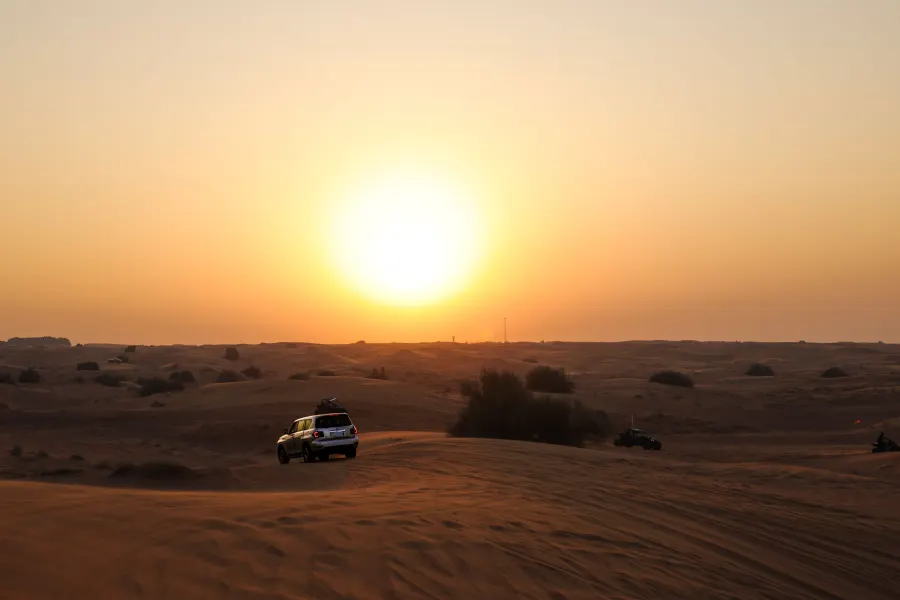
Your driver stops at the edge of the sand and drops the tyre pressure from roughly 35 PSI to 15. That single step is what makes the whole thing possible: a softer tyre floats on the surface instead of digging in. Then you spend thirty to forty-five minutes climbing, cresting and sliding down dune faces at angles that feel considerably steeper from inside the car than they look from outside it.
It is a rollercoaster, not a rally
The routes are fixed, the drivers run them several hundred times a year, and the speeds are lower than the sensation suggests — most of the drama comes from the pitch of the vehicle, not the speed. Seatbelts stay on throughout, and the driver will stop the moment anyone asks.
Who should sit this one out
- Pregnant guests. No exceptions — the lateral movement is not worth the risk.
- Anyone with back, neck or heart conditions, or recent surgery.
- Infants under two, who cannot be secured properly for it.
- Guests prone to motion sickness who have not taken anything for it.
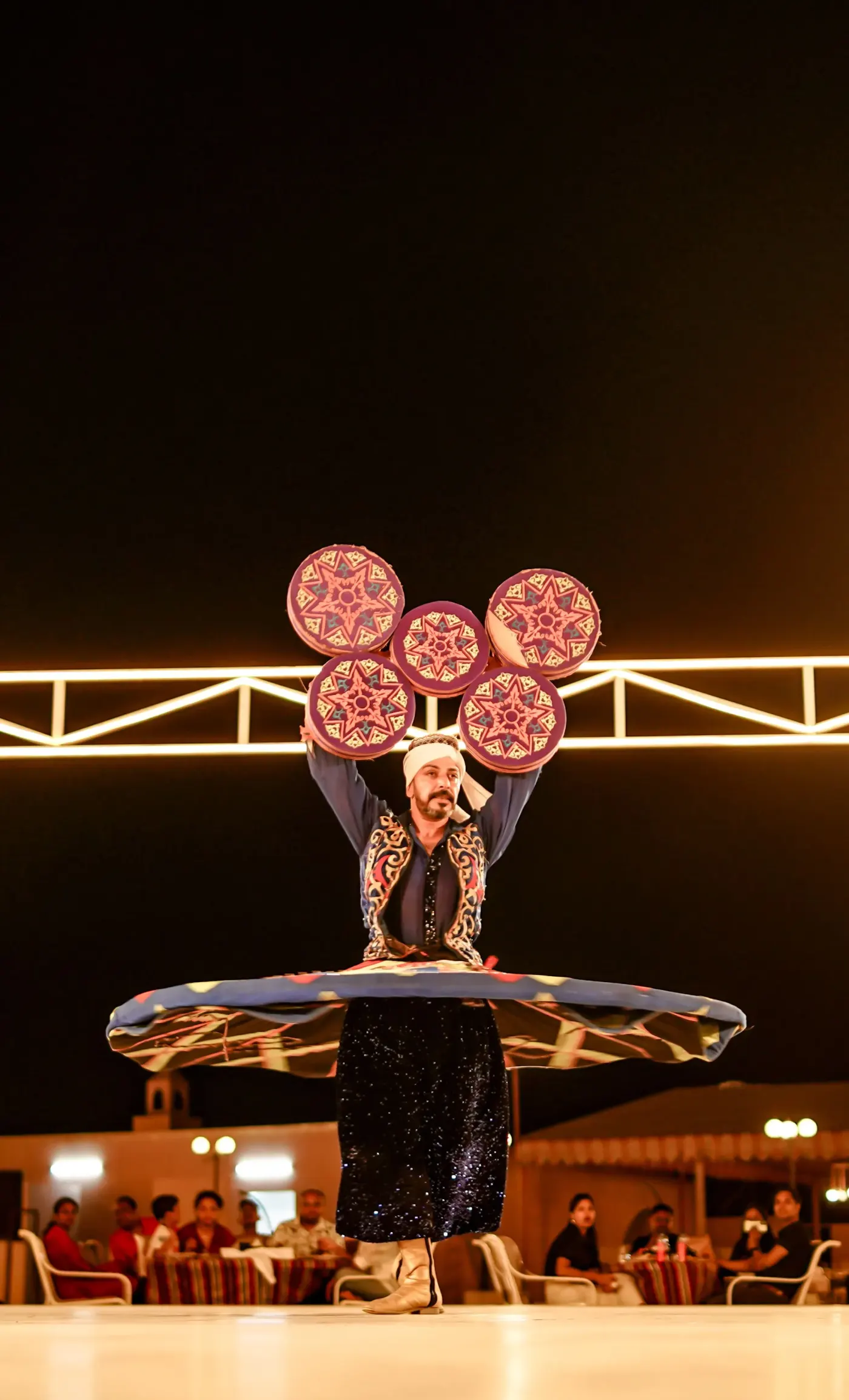
None of that means missing the desert. Tell us when you book and we will route your vehicle directly to the camp on the graded track, arriving at the same time as everyone else with the same dinner, the same shows and the same sunset. Several of our private bookings are exactly this.
Three small things that make it better
- Eat lightly beforehand. A full stomach and a dune crest are a poor combination.
- Sit in the middle row if you are sensitive to movement — the rear axle amplifies everything.
- Put loose items in the footwell, not on your lap. Phones do leave hands.
See it for yourself
Every safari on this site is run by our own drivers and camp crew, booked direct at the operator's price.